Chasing the Stars: South Africa’s Extraordinary Night Skies
When the Sun Goes Down, Another World Appears
South Africa’s landscapes are often celebrated for their mountains, coastlines, wildlife, and vineyards. Yet one of the country’s most remarkable attractions only reveals itself after dark.
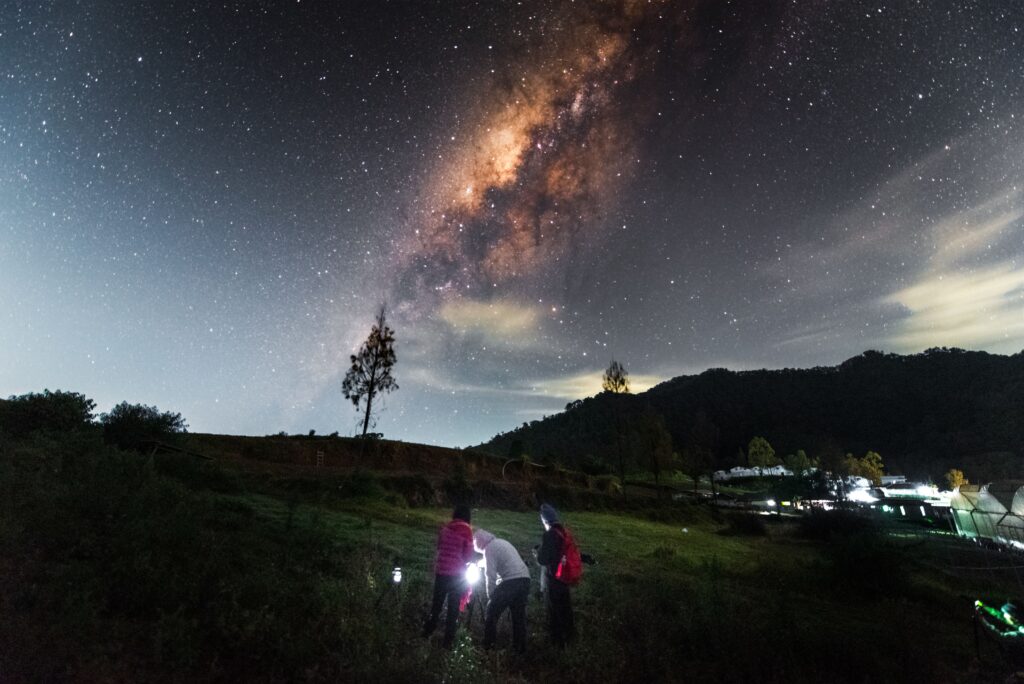
Far from city lights, an entirely different South Africa emerges. The sky fills with countless stars, the Milky Way stretches across the horizon, and constellations hidden from many parts of the Northern Hemisphere become visible in extraordinary detail.
For millions of people living in major cities around the world, truly dark skies have become increasingly rare. Light pollution has made it difficult to experience the night sky as previous generations once did.
In South Africa, some of the world’s best stargazing opportunities remain within easy reach, offering travelers a chance to reconnect with the universe in a way that few destinations can match.
The Magic of the Karoo
At the heart of South Africa’s stargazing reputation lies the Karoo.
This vast semi-desert region stretches across much of the country’s interior, where sparse populations, dry weather, and minimal light pollution create ideal conditions for astronomy.
By day, the Karoo is a landscape of endless horizons, rugged terrain, and remarkable tranquillity.
By night, it becomes a natural observatory.
Visitors often describe the experience as transformative. The sheer number of visible stars can be overwhelming for those accustomed to urban skies. Constellations appear brighter, planets stand out clearly, and the Milky Way becomes a prominent feature rather than a faint suggestion.
It is no surprise that astronomers regard this region as one of the finest places on Earth to study the night sky.
Sutherland: South Africa’s Stargazing Capital
For travelers seeking the ultimate astronomy experience, Sutherland is often the first destination that comes to mind.
Situated in the Northern Cape, this small town has become synonymous with stargazing thanks to its high altitude, dry climate, and exceptionally dark skies.
Sutherland is home to the Southern African Large Telescope (SALT), the largest optical telescope in the Southern Hemisphere. Visitors can tour the observatory and learn about the groundbreaking research conducted from this remote location.
Even those with little interest in astronomy often find themselves captivated by the sight of thousands of stars visible overhead.
Standing beneath these skies offers a sense of scale and perspective that few travel experiences can provide.
Luxury Meets the Cosmos
South Africa’s growing reputation as a premium travel destination has extended to stargazing as well.
Many luxury lodges and private reserves now include astronomy experiences as part of their guest offering. After enjoying fine dining, wildlife viewing, or spa treatments, visitors gather around telescopes or simply recline beneath the open sky to enjoy nature’s greatest light show.
This combination of comfort and natural wonder is one reason South Africa continues to attract travelers seeking meaningful luxury experiences.
Readers interested in the country’s broader luxury travel appeal may enjoy Why South Africa Is One of the World’s Best Value Luxury Destinations, which explores how exceptional experiences can be found throughout the country.
The Stars Above the Safari
Few experiences compare to watching the African sky after a day spent exploring the wilderness.
In wildlife reserves across South Africa, evenings often unfold beneath star-filled skies far removed from modern distractions. The sounds of nature replace urban noise, and the darkness reveals celestial views rarely seen in major population centres.
After tracking elephants, lions, or rhinos during the day, travelers often gather around a fire and look upward as constellations slowly emerge overhead.
It is an experience that perfectly complements South Africa’s reputation for unforgettable outdoor adventures.
A Photographer’s Dream
For photographers, South Africa’s night skies offer endless opportunities.
The combination of dramatic landscapes and minimal light pollution creates ideal conditions for astrophotography. Ancient rock formations, desert scenery, coastal cliffs, and historic buildings provide striking foregrounds beneath the stars.
The Karoo has become particularly popular among photographers seeking dramatic Milky Way images. During clear nights, the galactic core often appears with remarkable clarity.
Many travelers arrive hoping to capture photographs and leave with a deeper appreciation for the natural world.
More Than a Desert Experience
While the Karoo and Sutherland attract many astronomy enthusiasts, remarkable night skies can be found throughout the country.
Visitors travelling along The World’s Greatest Road Trip? Driving South Africa’s Garden Route often discover surprisingly clear evening skies away from larger towns.
Likewise, travelers exploring The Wild Coast: South Africa’s Last Great Coastal Frontier can experience nights where the stars seem to stretch endlessly above deserted beaches and rugged cliffs.
Even in the Cape Winelands, clear evenings provide spectacular opportunities to enjoy the night sky while overlooking vineyards and mountain ranges.
This accessibility makes stargazing not just a niche activity, but an experience that can enhance almost any South African journey.
A Different Kind of Adventure
Unlike many travel experiences, stargazing requires no special skills.
There are no trails to complete, no technical abilities to master, and no detailed itineraries to follow.
The experience begins by slowing down.
Finding a quiet location. Looking upward. Allowing the night sky to reveal itself.
In a world increasingly defined by constant movement and endless notifications, the simple act of observing the stars can feel surprisingly powerful.
The Best Time to Visit
South Africa offers excellent stargazing throughout the year, although weather conditions can vary by region.
Winter months often bring particularly clear skies to inland destinations such as the Karoo, while many parts of the country enjoy excellent viewing opportunities whenever cloud cover is limited.
The country’s location in the Southern Hemisphere also provides visitors with views of celestial features that are difficult or impossible to see from much of Europe and North America.
For international travelers, this adds an extra layer of fascination to the experience.
Looking Beyond the Horizon
Many visitors arrive in South Africa expecting spectacular safaris, beautiful coastlines, and world-class wine regions.
Those expectations are often exceeded.
What many do not anticipate is that some of their most memorable moments may occur long after sunset.
From the observatories of Sutherland to the remote landscapes of the Karoo, South Africa offers an opportunity to witness the night sky in all its natural splendour. It is an experience that complements the country’s mountains, oceans, wildlife, and cultural attractions while offering something entirely different.
South Africa’s Most Overlooked Wonder
Some destinations are defined by landmarks. Others are known for their history, cuisine, or natural beauty.
South Africa possesses all of these.
Yet one of its most extraordinary attractions lies overhead every night.
For travelers willing to venture beyond the glow of city lights, the reward is unforgettable. Beneath some of the darkest skies on Earth, the universe reveals itself in spectacular detail, transforming an ordinary evening into one of the most memorable experiences of any South African journey.
Sometimes, the greatest sights are not found on the ground.
They are waiting above.