The Remote Work Neighborhood Guide: Evaluating Johannesburg’s Core Hubs for Workability, Safety, and Connectivity
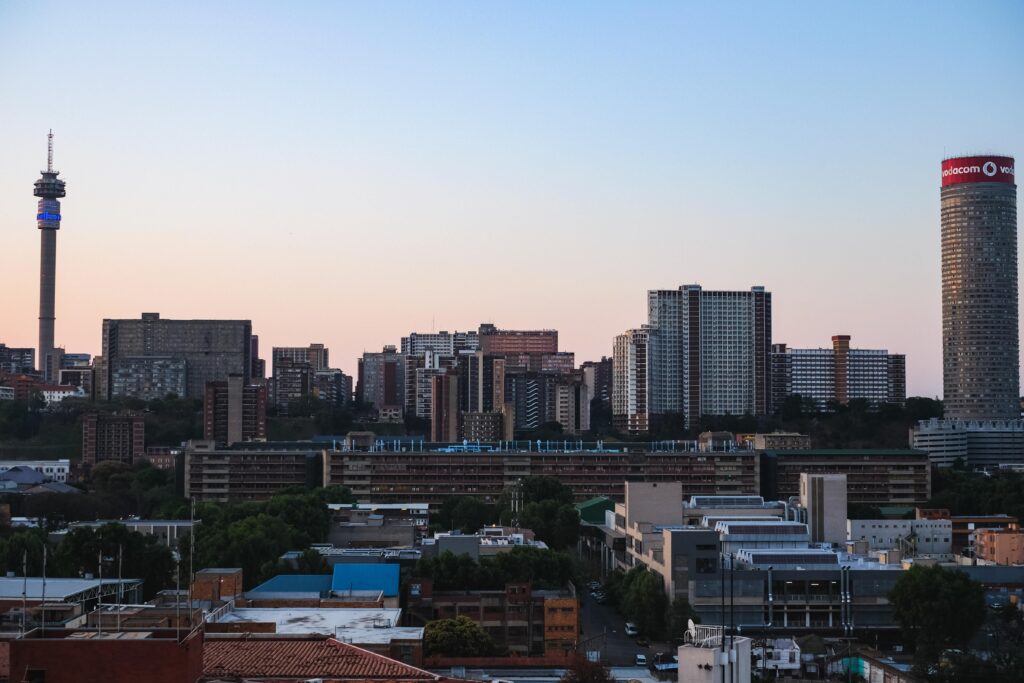
Shifting your remote work base to Johannesburg—Africa’s economic powerhouse—introduces an entirely different energy compared to coastal retreats. The “City of Gold” offers a hyper-dynamic urban landscape, a sophisticated corporate infrastructure, and an extraordinarily resilient lifestyle built around private enclaves and leafy, high-security suburbs. For digital nomads and freelancers, navigating Johannesburg requires moving past generic safety tropes and looking closely at how specific neighborhoods manage the city’s unique logistical challenges, namely private security structures and independent power backups.
For remote professionals requiring uninterrupted operational continuity, a successful stay in Johannesburg depends on picking an ecosystem that balances security with social connectivity. This granular guide evaluates Johannesburg’s four premier remote work hubs—Rosebank, Sandton, Melville, and Maboneng—specifically analyzing their day-to-day workability, security frameworks, cost of living, and technical infrastructure.
Rosebank: The Premium Walkable Transit Hub
Ideal Resident Profile
Rosebank is the ultimate base camp for corporate remote workers, international consultants, and tech nomads who want a pedestrian-focused, cosmopolitan lifestyle without the need for a car. Because the entire neighborhood is structured around a highly condensed commercial and transit core, it perfectly suits professionals who value high-speed efficiency, upper-tier dining, and immediate access to regional transit.
What It Offers
- Gautrain Connectivity: Direct access to the Gautrain Rosebank Station, allowing you to reach OR Tambo International Airport or Pretoria without stepping into traffic.
- Enclosed Pedestrian Lifestyle: The seamless integration of Rosebank Mall, The Zone, and the Oxford Parks precinct creates a safe, highly walkable outdoor-indoor mega-hub.
- Bulletproof Infrastructure: Most premium apartments and co-working spaces here feature top-tier, commercial-grade solar arrays or automated generators to bypass national grid load-shedding entirely.
What It Lacks
- Gritty Authenticity: The neighborhood is highly corporate, polished, and commercialised, lacking the raw, organic cultural layers found in older parts of the city.
- Affordable Sub-tiers: There are virtually no low-budget accommodation or dining options within the central walkable precinct.
Estimated Rental Ranges
- 1-Bedroom / Studio Apartment: R12,500 – R19,500 per month ($715 – $1,120 USD)
- 2-Bedroom Apartment: R22,000 – R32,000 per month ($1,260 – $1,830 USD)
- 3-Bedroom Luxury Apartment / Penthouse: R38,000 – R55,000+ per month ($2,170 – $3,150+ USD)
Estimated Cost of Living
- Single Individual: R26,000 – R36,000 per month ($1,490 – $2,060 USD) factoring in high-end gym memberships, cafe working, and premium groceries.
- Partners / Couples: R44,000 – R58,000 per month ($2,520 – $3,320 USD) combined, living in a modern high-rise block with comprehensive amenities.
- Small Families with Kids: R75,000 – R105,000 per month ($4,290 – $6,000 USD), reflecting the high cost of premium local childcare and private security access.
Sandton: The High-Octane Financial Epicentre
Ideal Resident Profile
Sandton caters directly to agency owners, fintech founders, and high-net-worth remote executives who thrive on intense corporate energy and require proximity to Africa’s largest financial institutions. If your remote business relies heavily on high-end business networking, hosting corporate clients in luxury boardrooms, or operating from world-class shared offices, Sandton’s hyper-secure vertical city layout is designed precisely for that cadence.
What It Offers
- Unrivaled Corporate Infrastructure: Home to premium, heavily fortified co-working spaces (like Workshop17 Sandton) that feature total power, water, and internet redundancy.
- Concentrated Luxury Retail: Immediate access to Sandton City and Nelson Mandela Square for premium international retail and fine dining.
- Maximum Security Enclaves: The commercial node relies on highly visible private security networks, surveillance, and rapid-response teams, keeping daytime street safety exceptionally high.
What It Lacks
- Neighborhood Suburbia Feeling: It is an environment of glass, steel, and concrete skyscrapers; there is very little green space or casual street-level community vibe.
- Traffic gridlock: If you do choose to drive, the central financial district suffers from severe traffic congestion during peak commuting hours.
Estimated Rental Ranges
- 1-Bedroom / Studio Apartment: R13,000 – R21,000 per month ($745 – $1,200 USD)
- 2-Bedroom Apartment: R24,000 – R36,000 per month ($1,370 – R2,060 USD)
- 3-Bedroom High-Rise Penthouse: R45,000 – R70,000+ per month ($2,575 – $4,000+ USD)
Estimated Cost of Living
- Single Individual: R28,000 – R40,000 per month ($1,600 – $2,290 USD) leveraging executive spaces, regular rideshares, and fine dining.
- Partners / Couples: R48,000 – R65,000 per month ($2,750 – $3,720 USD) combined, optimizing for high-end apartment living within the financial district.
- Small Families with Kids: R80,000 – R115,000 per month ($4,580 – $6,580 USD); while highly secure, the lifestyle is heavily reliant on indoor malls and private driving.
Melville: The Bohemian Café and Academic Hub
Ideal Resident Profile
Melville is the perfect ecosystem for writers, independent scholars, creative freelancers, and budget-conscious digital nomads who prefer character, heritage architecture, and a strong sense of community over corporate polish. Located in Johannesburg’s leafy West Rand near major universities, its main artery (7th Street) is packed with independent bookstores, vintage thrift shops, and pavement cafes, making it highly attractive to self-reliant professionals who enjoy a relaxed, artistic pace.
What It Offers
- Organic Community Vibe: One of the few historic neighborhoods in Johannesburg where street-level cafe culture and artistic collaboration happen naturally.
- Excellent Value for Money: Substantially lower entry costs for large, character-filled properties featuring pressed ceilings and wooden floors.
- Casual Daytime Workability: A high concentration of relaxed, independent coffee spots that are highly welcoming to remote workers typing away for hours.
What It Lacks
- Uniform Power Redundancy: Unlike Rosebank or Sandton, older freestanding homes and independent cafes in Melville frequently lack automated backup power, requiring remote workers to heavily invest in their own UPS systems or solar rigs for load-shedding cycles.
- Strict Security Requirements: The neighborhood requires high situational awareness; while the Melville City Improvement District patrols actively, opportunistic property theft and street crime are higher here than in enclosed corporate nodes.
Estimated Rental Ranges
- 1-Bedroom Garden Cottage / Studio: R6,500 – R10,500 per month ($370 – $600 USD)
- 2-Bedroom Terraced House / Flat: R11,000 – R16,500 per month ($630 – $945 USD)
- 3-Bedroom Heritage Family Home: R18,000 – R26,000 per month ($1,030 – $1,490 USD)
Estimated Cost of Living
- Single Individual: R16,000 – R23,000 per month ($915 – $1,315 USD), providing a comfortable, highly social lifestyle centered around local neighborhood joints.
- Partners / Couples: R25,000 – R36,000 per month ($1,430 – $2,060 USD) combined, allowing for a spacious standalone house with a garden.
- Small Families with Kids: R42,000 – R58,000 per month ($2,400 – $3,320 USD), representing an affordable, culturally rich suburban option, provided the property has solid perimeter fencing and active security links.
Maboneng: The Urban Creative Precinct
Ideal Resident Profile
Maboneng caters directly to visual content creators, filmmakers, underground artists, and social entrepreneurs who thrive on raw inner-city energy, loft living, and cultural innovation. This industrial-regeneration precinct on the eastern edge of the inner city is an intense incubator of street art, independent galleries, and afro-futuristic design, making it ideal for younger, highly adaptive travelers who want to embed themselves directly inside Johannesburg’s urban renaissance.
What It Offers
- Striking Industrial Architecture: Converted warehouses provide massive, affordable open-plan loft apartments with exceptional natural light for studio work.
- Vibrant Cultural Network: Surrounded by independent cinemas, rooftop event spaces, and weekend culinary markets.
- Affordable Base Tier: Offers the lowest cost of entry for accommodation and local entertainment among Johannesburg’s primary creative hubs.
What It Lacks
- Islanded Safety Dynamics: While the core blocks of the precinct are heavily monitored by private security wardens, the security profile drops sharply just one or two blocks outside the designated perimeter, requiring strict situational awareness and reliance on rideshare apps after dark.
- Green Space and Quiet: The environment is entirely industrial and concrete; street noise, nightlife baselines, and urban traffic remain constant throughout the week.
Estimated Rental Ranges
- 1-Bedroom Studio Loft: R5,500 – R8,500 per month ($315 – $485 USD)
- 2-Bedroom Converted Loft: R9,500 – R14,000 per month ($545 – $800 USD)
- 3-Bedroom Industrial Penthouse: R16,500 – R23,000 per month ($945 – $1,315 USD)
Estimated Cost of Living
- Single Individual: R14,000 – R20,000 per month ($800 – $1,145 USD), allowing a highly immersive lifestyle focused around local galleries, rooftop bars, and shared creative spaces.
- Partners / Couples: R22,000 – R32,000 per month ($1,260 – $1,830 USD) combined, offering massive live-work spaces for a fraction of suburban costs.
- Small Families with Kids: R38,000 – R52,000 per month ($2,170 – $2,975 USD); however, due to the total lack of family playgrounds, schools, and secure family infrastructure, the precinct is rarely chosen by remote workers with children.
Planning Your Move?
Before finalizing your base in Gauteng, make sure to read our comprehensive South Africa Digital Nomad Visa Requirements to ensure your freelance or corporate remote documentation aligns with recent immigration updates. If you are still split between the coast and the interior, browse our regional breakdown on the Cost of Living in Cape Town vs Johannesburg to see exactly how your lifestyle budget will stretch across South Africa’s two largest metros.