Road-Tripping South Africa: A Mid-Luxury Safety and Logistics Guide
Planning a two-week road trip across South Africa is one of the most rewarding travel experiences in the world. However, international adult travelers often feel a sense of hesitation when it comes to safety and logistics. Navigating a foreign country should enhance your vacation, not cause anxiety.
Operating on a comfortable, mid-luxury budget allows you to bypass budget travel pain points and move between provinces with complete peace of mind. Here is exactly how to navigate South Africa safely, smoothly, and elegantly.
Domestic Aviation and Smart Fleet Rentals
South Africa’s major regions are separated by vast, beautiful distances. To execute a 14-day itinerary without spending your entire vacation behind the wheel, utilize the highly efficient domestic flight corridors.
- The Flight Strategy: Mainline carriers like Airlink, CemAir, and South African Airways offer exceptional service, connecting Johannesburg, Durban, Gqeberha, and Cape Town daily. Booking these business-class or premium economy flights keeps transit smooth and ensures your luggage allowance covers your wine and souvenirs.
- Choosing the Right Vehicle: When renting a car at the airports, choose an SUV or a crossover vehicle. While a standard compact sedan can technically handle the main highways, a vehicle with higher ground clearance offers superior comfort on scenic mountain passes in the Drakensberg and ensures a much better viewing height when driving yourself through national safari parks like Addo. Stick to reputable international brands like Avis, Hertz, or Europcar.
Navigating the Roads Like a Local
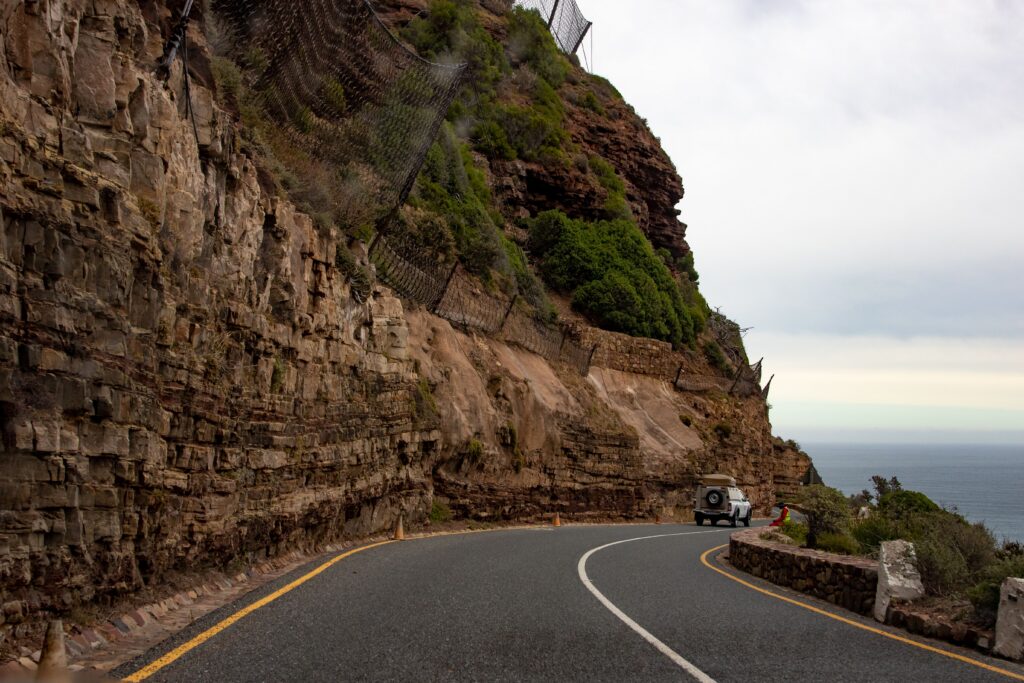
Driving in South Africa is an absolute pleasure, provided you know the local rules of the road and highway etiquette.
- Keep to the Left: South Africans drive on the left side of the road, and steering wheels are on the right side of the vehicle.
- The Yellow Lane Courtesy: On single-lane highways, slower vehicles will often pull over onto the wide hard-shoulder (the yellow lane) to let you pass. Once you pass them, it is customary to flash your hazard lights two or three times as a thank you. They will briefly flash their headlights back to say you are welcome.
- Potholes and Speeding: Stick strictly to major national roads (marked with an N, like the N2 or N1). Secondary rural roads can develop severe potholes quickly. Avoid driving long distances at night, as unlit roads, stray livestock, and sudden road hazards become difficult to spot.
The Reality of Safety and Urban Awareness
It is no secret that South Africa has a reputation regarding crime. However, by practicing situational awareness and utilizing premium services, mid-luxury travelers can easily minimize risks.
- In the Cities: When exploring Johannesburg, Pretoria, or Cape Town, rely on Uber Black or pre-booked private hotel transfers for evening dining and nightlife. Uber is incredibly safe, efficient, and widely used by locals. Avoid walking around quiet or unlit urban streets after dark; always door-to-door your evening transits.
- Protect Your Valuables: Keep your luxury watches, expensive jewelry, and cameras out of sight when walking through bustling city centers. When driving, lock your doors automatically and place all bags, passports, and shopping items completely out of sight in the boot (trunk) of the vehicle rather than on the passenger seats.
- Car Guards: When parking in public areas, shopping centers, or near beaches, you will encounter local “car guards” wearing high-visibility vests. They are completely normal and help keep an eye on your vehicle while you are away. It is customary to tip them between R5 and R20 (roughly 50 cents to a dollar) in cash when you return to your car.
Financial Logistics and Smooth Transactions
- Going Cashless: South Africa has a highly sophisticated banking infrastructure. You can pay for almost everything—from fine dining and boutique hotels to fuel stops and market stalls—using tap-to-pay, Visa, Mastercard, or Apple Pay.
- Keep Minimal Cash: Only keep a few hundred South African Rand (ZAR) in small notes on hand for tipping car guards, casual street vendors, or safari rangers. Avoid carrying large envelopes of foreign currency.
- Toll Roads: The major national highways feature toll plazas. Ensure your car rental agency includes an e-toll tag in the vehicle, which automatically logs the tolls to your rental bill, allowing you to drive through the express lanes without stopping.