Boys Left Behind: Perception vs Reality in South Africa

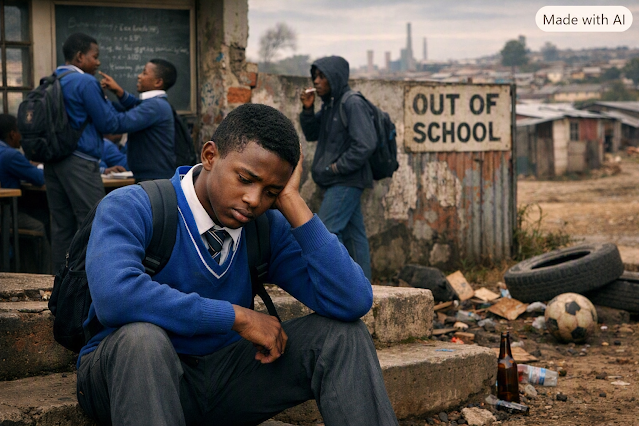
South African boys face rising dropout rates, unemployment, and social pressures, fueling a crisis of crime and suicide while girls benefit from targeted empowerment programs.
South Africa is wrestling with a troubling narrative: boys are being left behind while girls are given priority in education, skills, and opportunities. On the surface, this belief seems to hold weight, since boys drop out of school at higher rates, dominate suicide statistics, and are overrepresented in crime. Yet when we dig into the data, the picture is more complex. Girls are not “favored” unfairly; they were historically excluded, and targeted charities emerged to correct that imbalance. The real crisis is that boys now face unique vulnerabilities without equivalent support.
Charities such as 18twenty8, GirlCode, and the Thuli Madonsela Foundation were founded largely by women to empower girls who were once denied access to education and leadership. These programs provide bursaries, mentorship, and tech training, helping girls close historic gaps. Boys, however, often lack similar large‑scale initiatives. This fuels the perception that boys are ignored, even though both genders grow up in the same homes marked by poverty, absent fathers, and single‑mother households. Poverty alone cannot explain boys’ dropout rates, since girls face the same conditions yet persist in school at higher rates. The difference lies in social pressures: boys are more vulnerable to gangs, peer pressure, and toxic masculinity norms that frame education as weakness.
Employment data complicates the debate further. Men dominate unskilled jobs in mining and construction, but this does not equalize inequality. Women still face higher unemployment overall, earn less, and remain concentrated in low‑paying sectors such as domestic work and informal trade. Despite this, men are far more likely to die by suicide, accounting for nearly 80 percent of cases, driven by unemployment, isolation, and the cultural expectation to be providers. Women, though poorer, are more likely to seek help and benefit from empowerment networks, which reduces their suicide risk.
So, is the belief true or false? It is partly true. Boys are indeed struggling, but not because girls are unfairly prioritised. Girls’ empowerment programs are correcting historic injustices, while boys’ crisis stems from untreated mental health, toxic masculinity, and lack of targeted support. The debate should not pit boys against girls. Instead, South Africa must recognize that both genders face poverty differently, and without balanced interventions, boys will continue to fall through the cracks, fueling cycles of crime, gender‑based violence, and instability.