Weaponizing Tragedy: How Jacinta Ngobese-Zuma is Exploiting the Ekurhuleni Femicide Victims to Sow Division
By: Daily Stream News

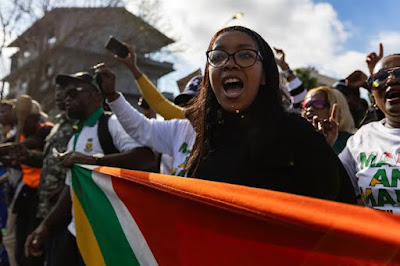
The tragic discovery of multiple women’s bodies dumped in Ekurhuleni, Gauteng, has gripped South Africa in a state of profound grief and panic, but it has also become a lightning rod for dangerous political opportunism. Jacinta Ngobese-Zuma, the leader of the anti-immigration March and March movement, has thrust herself into the center of this tragedy by claiming that the state’s sluggish response stems entirely from the victims being South African. She asserted that if the victims were foreign nationals, the government would have acted immediately to protect its international image. However, an analysis of police data and forensic research reveals a deep divide between her inflammatory rhetoric and the empirical reality of the situation, exposing how a horrific tragedy is being weaponized to stoke national division.
Ngobese-Zuma’s assertion that the government explicitly deprioritizes South African lives is factually false, as police investigations and executive directives have actively prioritised the Ekurhuleni case. The systemic delays plaguing the investigations—such as severe backlogs in DNA processing and a shortage of local detectives—are structural failures of a burdened criminal justice system that impacts all victims within the country uniformly, regardless of nationality. By framing these administrative weaknesses as intentional government apathy toward South Africans, Ngobese-Zuma is intentionally misleading the public. There is zero evidence to suggest that cases involving foreign nationals receive expedited care, making her narrative a calculated distortion of a universal national crisis.
Furthermore, national crime statistics decisively dismantle the narrative of an external threat by revealing that the perpetrators of most women killings in South Africa are local men known to the victims. According to data from the South African Police Service and the South African Medical Research Council, the country’s intimate partner femicide rate is nearly five times the global average. The overwhelming majority of female murder victims are killed by their husbands, boyfriends, or family members inside their own homes and immediate communities. By trying to blame foreign nationals for a crisis rooted deeply in local domestic violence and systemic toxic masculinity, Ngobese-Zuma is actively obscuring the true identity of the perpetrators, which ultimately leaves vulnerable women at greater risk.
Ultimately, Ngobese-Zuma’s claims are entirely about her own political gain rather than any genuine concern for the victims of gender-based violence. Superimposing an anti-immigrant narrative onto the Ekurhuleni killings allows her to validate public anger, weaponize local trauma, and draw media attention to her movement’s border protests. This strategy deliberately shifts public focus away from deep-seated domestic issues that require urgent societal reform, choosing instead to place the blame on an external scapegoat. While the families of the Ekurhuleni victims deserve absolute justice and state accountability, leveraging their painful loss to incite xenophobic tension does nothing to protect South African women, proving that her agenda is focused on political mobilization rather than healing a broken nation.